Farm villa
Sometimes the Right Diagnosis Costs Less Than the Wrong Repair
Tracing a persistent dampness problem in a farm villa using targeted investigation, PQWT and thermal imaging
All case studies
Diagnose first. Repair next.
The Problem
A well-maintained farm villa with premium interiors was facing persistent dampness on the walls, with symptoms resembling capillary rise. The moisture was damaging wall finishes and creating conditions for fungal growth. Several attempts had been made to understand the problem, but the actual source remained unclear. This is a common difficulty in seepage cases: the visible damp patch may be away from the point where water is actually entering.
Why Diagnosis Mattered
Without identifying the source, the next step could easily have become extensive waterproofing, plaster removal, chemical treatment or repeated localized repairs. Such treatments can become expensive while still failing if they address the symptom rather than the source. The key question was simple: Where is the water actually coming from?
Cyond Investigation
The Cyond team carried out a targeted investigation of the affected zones using site observations together with PQWT leak-detection equipment and thermal imaging. The purpose was to narrow the possible pathways and identify the most likely source before recommending repair.
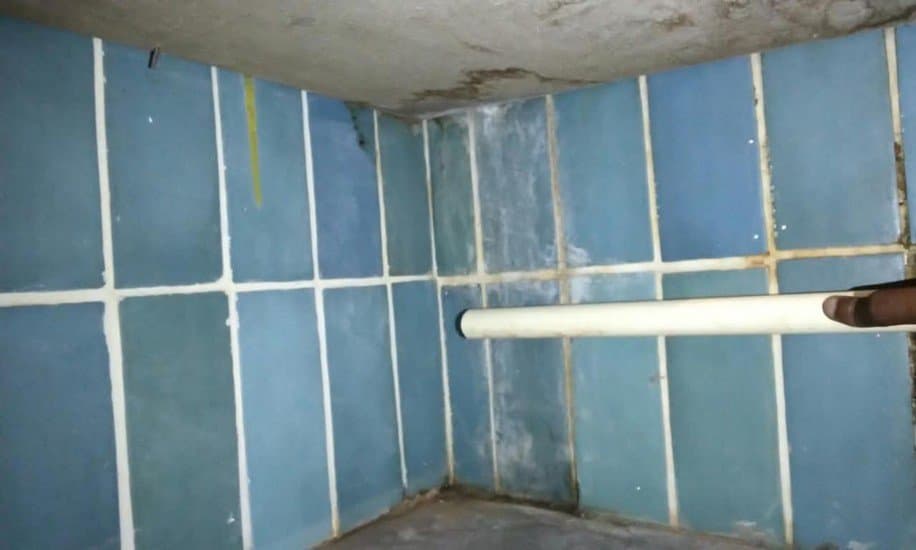
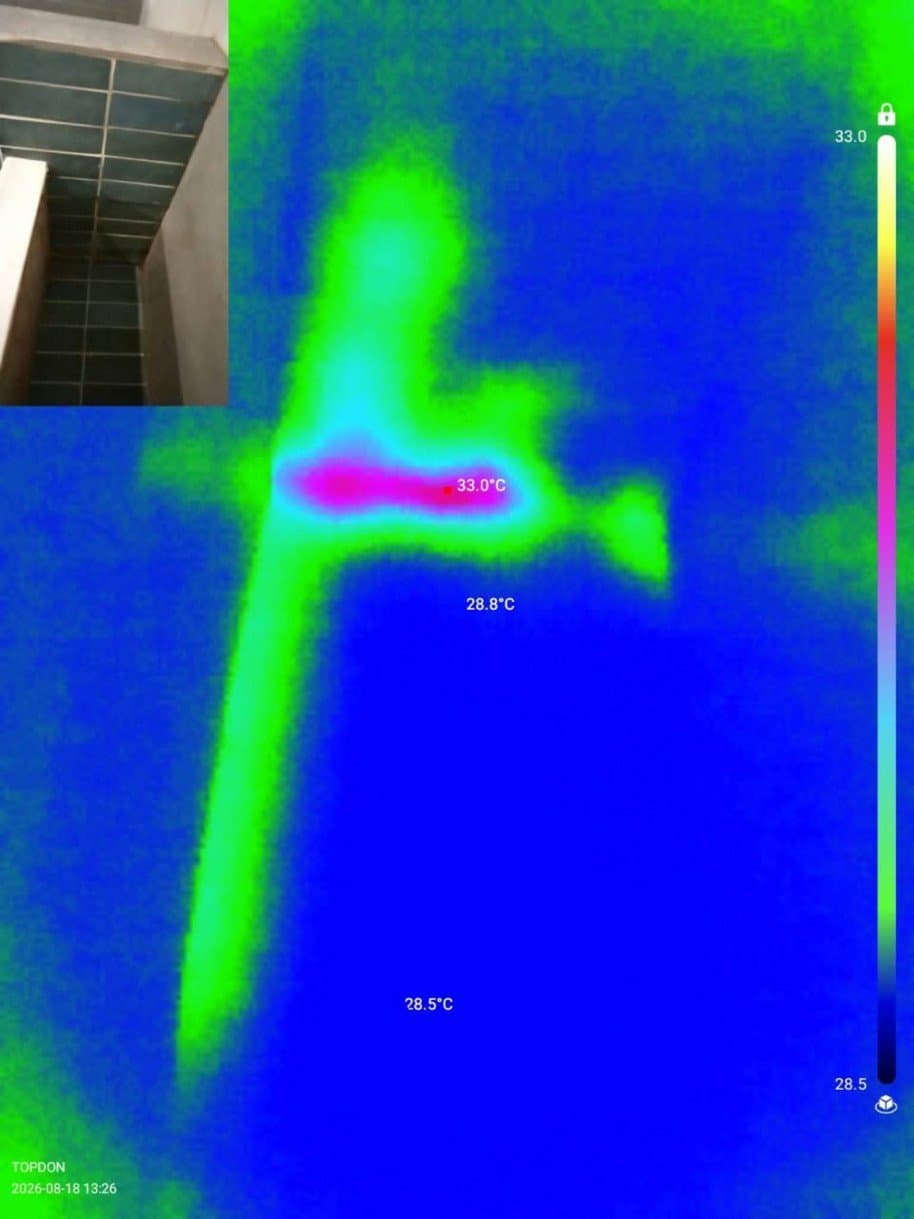
What the Investigation Indicated
The thermal images showed distinct temperature anomalies along localized wall and service-line zones. When these observations were correlated with the site layout and the PQWT investigation, the suspected source was narrowed to the water inlet pipe near the sink location. This finding changed the repair strategy from broad treatment of the visibly affected walls to a focused intervention at the suspected water source.
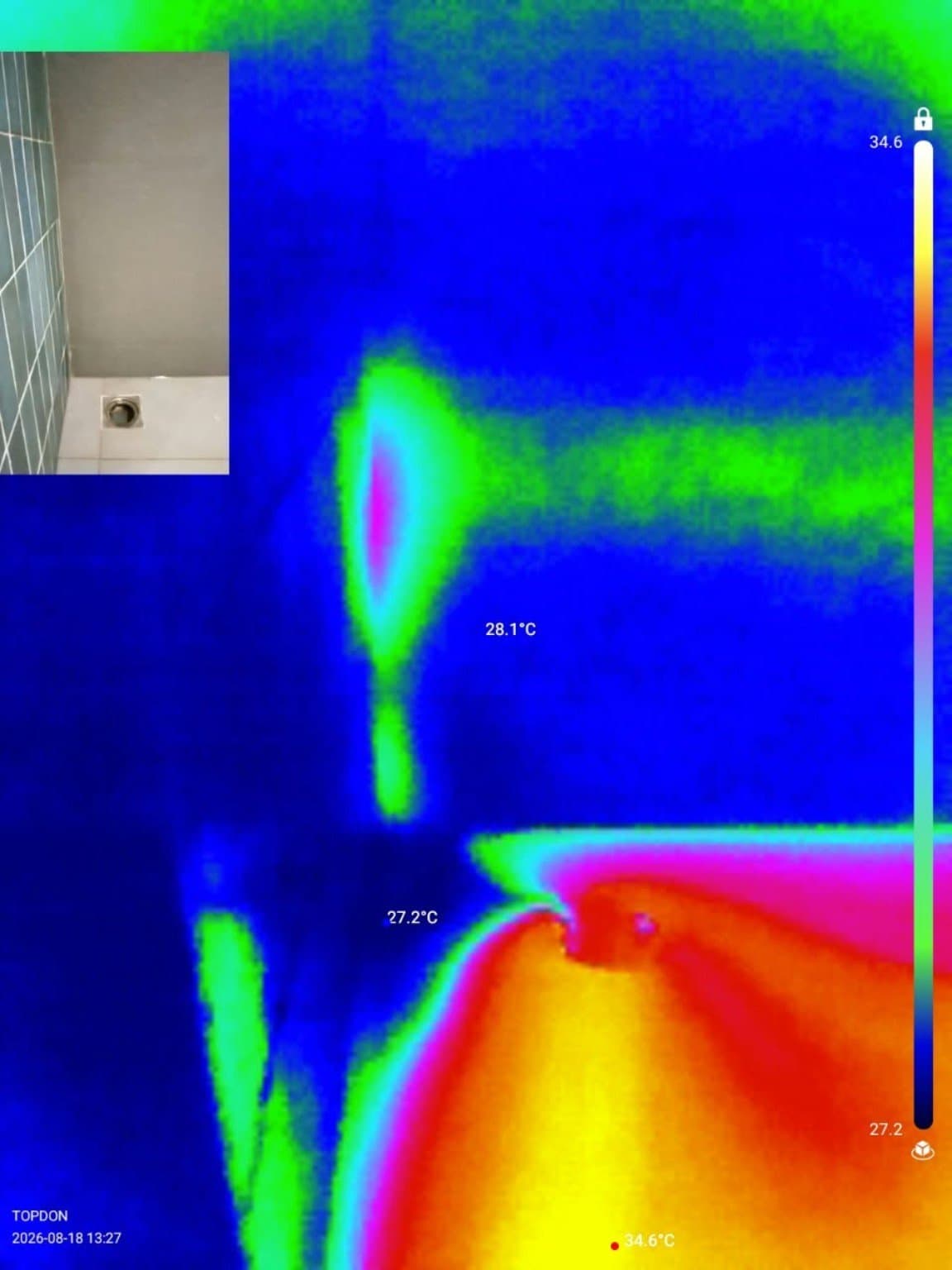
The Lesson
In seepage and dampness problems, what is visible on the wall is often only the symptom. Water can travel through concealed interfaces, joints, service routes, floors and wall systems before becoming visible. Path: Symptom → Investigation → Root cause → Targeted repair. At times, a building does not need an expensive treatment costing lakhs. It needs the right diagnosis so that money is spent only where intervention is actually required.
SYMPTOM → INVESTIGATION → ROOT CAUSE → TARGETED REPAIR
Important Technical Note
Thermal imaging identifies temperature patterns and anomalies; by itself it does not prove the presence or exact source of moisture. The diagnosis in this case was based on correlation of thermal observations with site inspection, service locations and the other investigation method used. Repair findings and post-repair monitoring should be used to confirm closure of the identified source.
Don't start with the most expensive repair. Start by asking whether the source has been identified correctly.
Download PDF case studyRelated services
Facing a similar leak?
Book a diagnosis slot, same process: find the source, then fix it right.
Book Your Slot Now