
- By cyond
- No Comments
- Uncategorized
A lot of the times, you might not even know that there’s a water leakage in your house. They start in one place in your home, spread to the other rooms, damage walls and weaken the entire structure. By the time you notice, the damage is already done.
The real question isn’t whether you should detect leaks, it’s how you do it. Choosing between traditional techniques and modern solutions can decide whether you fix a minor issue early or deal with a major structural issue later.
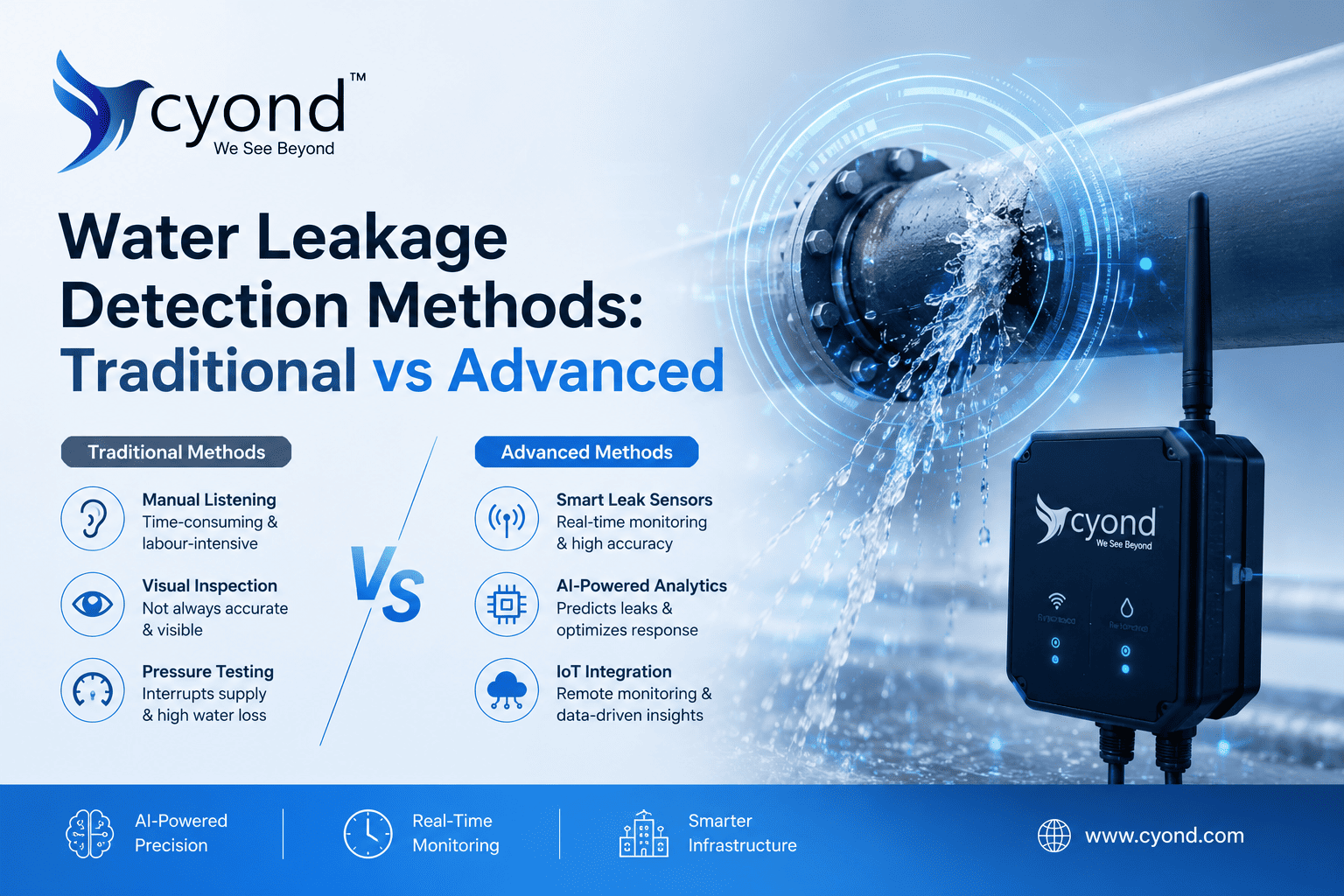
Traditional Water Leakage Detection Methods
Virtual inspection
This method of leak detecting is very basic. In this method, people look for all the places where there are damp patches, peeling paint and mold growing. The problem with this method is that if the problem is visible, then the damage has already been done.
Pressure testing
In plumbing systems, the increase or decrease in pressure will tell you if there is a leak. But, this method doesn’t tell you where the source of the leak is.
Dye testing
Coloured dyes are added to the water to track where the leaks are. This method works in controlled environments but not in complex or concealed pipelines for home water leak detection.
Limitations of Traditional Methods
- They are reactive, not preventive
- You usually have to break walls or floors for these methods to work
- They are not really accurate, especially in hidden leakages
- It is time consuming and labour intensive
A typical water leak detection company using only traditional tools often ends up increasing repair work because of guessing.
Advanced Water Leakage Detection Methods
Acoustic leak detection
This method uses sound as a technology to detect the leaks that are hidden behind walls or undergrounds. Even the smallest of leaks cause a vibration that can be detected without any damage.
Thermal imaging
Infrared cameras identify temperature differences caused by moisture inside walls and ceilings. It’s widely used in home water leak detection because it can detect hidden leaks quickly.
Moisture mapping
Professionals use advanced sensors to measure moisture levels across surfaces. This helps in identifying the spread and source of leakage more accurately.
Smart leak detection systems
Modern systems can monitor water flow in real time and alert you instantly. Many consider this part of the best water leak detection services because it prevents damage before it even starts.
Why Advanced Methods Stand Out
- These are non-invasive and precise methods
- You get a faster detection with minimal disruption
- They are cost effective
- These are suitable for complex buildings
Traditional vs Advanced: The Difference
- Accuracy: Traditional methods guess where the leaks are while advanced methods confirm accurately.
- Damage: Traditional methods may require breaking structures whereas advanced methods don’t need to break the house.
- Speed: Manual checks take a lot of time. With modern tools, you get instant insights delivered.
- Cost Impact: Advanced methods might look more expensive but they are actually a lot cheaper than traditional methods.
FAQs
A. Modern techniques like thermal imaging and acoustic sensors are considered more effective than traditional methods because they detect leaks without damage.
A. Yes, advanced home water leak detection methods can locate leaks without any structural damage.
A. That’s a risky move. Small leaks often lead to structural damage, which costs far more to fix later.
A. If you notice recurring dampness or unexplained water bills, it’s time to call a water leak detection company.
Conclusion
Advanced solutions offer precision, speed and minimal damage, making them the smarter choice for both homes and commercial spaces. Relying on outdated techniques is no longer just inefficient, it’s expensive in the long run.
If you’re serious about protecting your property, contact Cyond today to get a full house water leakage inspection.
Follow us on Instagram.